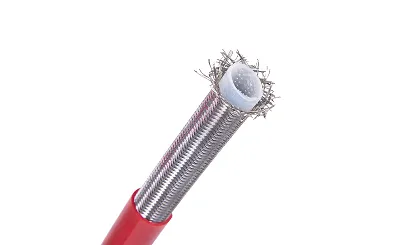

Silicone extruded strips are made through a series of production processes, including rubber refining, extrusion molding, high-temperature vulcanization, and subsequent processing.
First, the silicone raw materials are mixed and cut into silicone extrusions of uniform thickness, length, size, and shape to ensure the silicone strips are dense and uniform in quality. Then, they are fed into a silicone extruder and extruded through a die to form silicone profiles or pre-formed semi-finished products of various cross-sectional shapes. Next, high-temperature vulcanization is performed, followed by winding with silicone tubing. A second vulcanization removes any odor from the extruded silicone strips and prevents yellowing. Finally, according to customer requirements, subsequent processing, such as length cutting and bonding, is carried out, and the strips are packaged and shipped as required.
Due to the superior product characteristics of silicone extruded strips, they can be applied to different parts and areas of use in different shapes, giving them different uses and functions.
Silicone extruded strips possess excellent tensile strength and elasticity, resistance to compression and deformation, corrosion, and extreme temperatures, exhibiting excellent long-term performance within a temperature range of -50°C to +250°C. They also possess good electrical insulation properties, adapting to diverse operating environments, and exhibit good resistance to ozone, ultraviolet radiation, and aging. Silicone extruded strips are not only environmentally friendly, non-toxic, odorless, and chemically stable, but also boast high production speed and efficiency. Furthermore, extrusion molding is not limited by length , allowing for the production of extra-long products, making silicone extruded strips widely popular in automated manufacturing industries.